When should I consult about changes in my scalp?
We've put together health information you can check in everyday life.
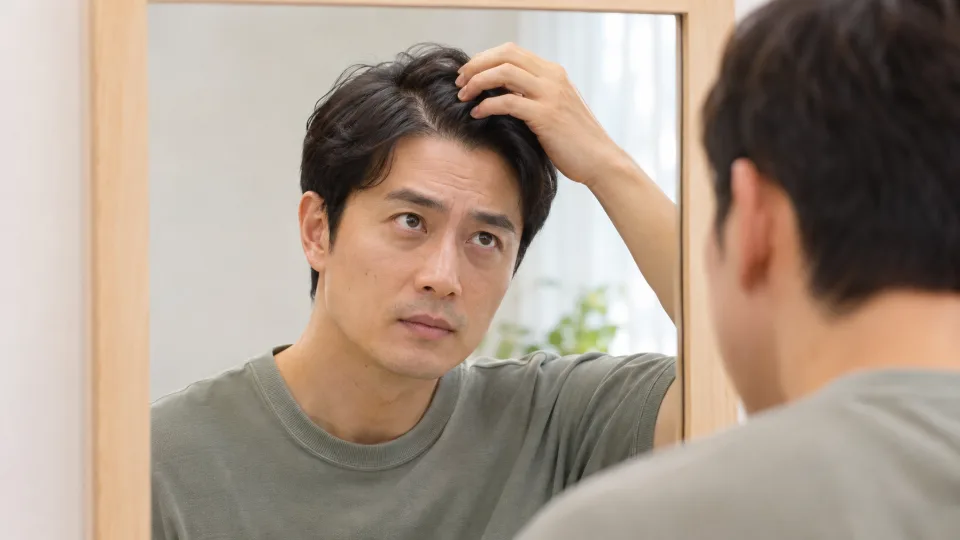
Does your scalp itch even after washing your hair, and do flakes falling on your shoulders or a widening part bother you? Scalp changes can result from dryness or irritation from products, but they may also be related to skin conditions or hair loss. If discomfort keeps recurring or the amount of hair has noticeably changed, it is a good idea to have the cause checked.
Consider a consultation if you notice these changes
Scalp itching, flaking, or redness doesn't improve with care or keeps coming back.
Your scalp stings or hurts, and pimples or oozing appear.
Much more hair than usual is suddenly falling out, or some areas look like round bald patches.
Your part is getting wider or the scalp on your crown is more visible than before.
Itching and a rash appeared after dyeing your hair or using a new shampoo.
Similar scalp symptoms can have different causes
Itching and flaking can occur not only with simple dryness but also with seborrheic dermatitis, contact dermatitis, scalp psoriasis, and other conditions. If hair loss is also present, we need to look at where hair is falling out and how it is progressing.
The cause of hair loss cannot be determined just because the scalp feels itchy or warm. It is necessary to check when the symptoms began, how they recur, the products you use, and recent changes in your health.
Reduce irritation in daily life
Don't scratch your scalp hard with your nails or force flakes off, and rinse shampoo out thoroughly. If symptoms appeared after using a new product or dyeing your hair, stop using that product and tell us at your visit. Recording when the changes began and taking photos of your scalp will help the consultation.
For recurring scalp concerns, start by checking your condition
At Cheong-dam Oriental Clinic Gwanghwamun, we look at changes in your scalp and hair along with your lifestyle and health, and discuss an individual treatment and care plan.